The Art of Medicine with Dr. Andrew Wilner

Telemedicine and Fatherhood: An interview with locum tenens physician Franklyn Rocha, MD

Andrew Wilner, MD Season 1 Episode 135

Use Left/Right to seek, Home/End to jump to start or end. Hold shift to jump forward or backward.

0:00 | 31:15

Dr. Wilner would love your feedback! Click here to send a text! Thanks!

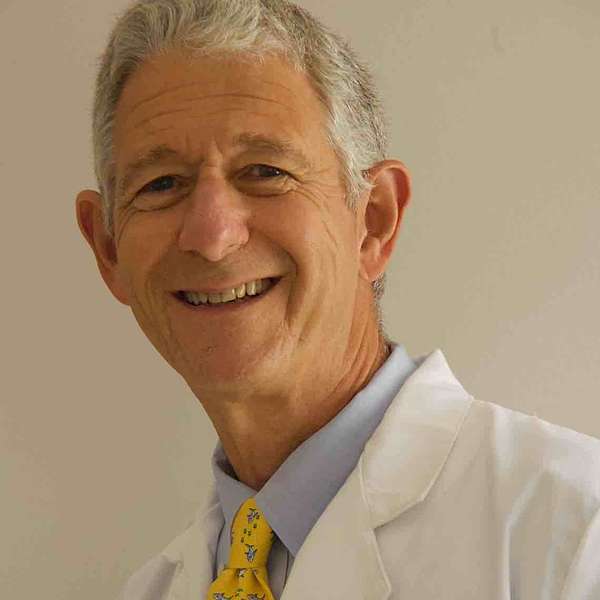
Many thanks to Franklyn Rocha, MD, a fellow neurologist and with an unusual locum tenens practice. He is a clinical neurophysiologist and neurohospitalist consultant and Chief Executive Officer/Owner of IRD Neuroanalysis, Inc. Dr. Rocha does in-person neurology consults at Harbor-UCLA Hospital near his home but primarily works as a telemedicine physician from the first floor of his townhouse!


Dr. Rocha is also a new father of a healthy, bouncing, baby boy. Prior to his son’s birth, Frank had been thinking a lot about fatherhood. He published an essay on KevinMD.com about how difficult it can be for physician fathers to be physically present with a newborn. He cites academic demands, peer pressure from other physicians, lack of paid paternal leave, and the tradition of putting patients first as formidable obstacles that discourage new physician fathers from taking parental leave.


It's clear that Frank intends to be a successful physician and entrepreneur, but he also didn’t want to miss out on the unique experience of fatherhood. During our 30-minute podcast, Frank explained how owning his own business and working telemedicine allowed him to spend nearly four months of parental leave with his wife and newborn son.


For physicians with the added challenge of a special needs child, parenting demands are even greater. For these physicians, David Hirsch’s “Special Father’s Network” offers valuable resources.


To learn more about Dr. Rocha, please visit his Linked-In profile: https://www.linkedin.com/in/franklyn-rocha-cabrero-m-d-67287a27/


Please click "Fanmail" and share your feedback!

If you enjoy an episode, please share with friends and colleagues. "The Art of Medicine with Dr. Andrew Wilner" is now available on Alexa! Just say, "Play podcast The Art of Medicine with Dr. Andrew Wilner!" 

To never miss a program, subscribe at www.andrewwilner.com

Follow me on Instagram: @seaphoto2025

X: @drwilner

linkedin.com/in/drwilner 


Please rate and review each episode. 

To contact Dr. Wilner or to join the mailing list: www.andrewwilner.com.

 Thanks for listening!

@uthsc @drwilner @chg @yaleu 

 #theartofmedicinewithdrandrewwilner

 @amazonmusic @medscape 

 #podcastsonamazonmusic

[Andrew Wilner, MD] (0:08 - 1:09)

Welcome to the Art of Medicine, the program that explores the arts, business, and clinical aspects of the practice of medicine. I'm your host, Dr. Andrew Willner. Today, I'm pleased to welcome Dr. Franklin Rocha. Frank is a fellow neurohospitalist and neurophysiologist. He's also a new father. Frank just published an essay on Kevin MD, addressing the often overlooked needs of physician fathers.


He's going to tell us all about it. But first, a word from our sponsor, locumstory.com. Locumstory.com is a free, unbiased educational resource about locum tenants. It's not an agency. Locumstory answers your questions on their website, podcast, webinars, videos, and they even have a locum 101 crash course. Learn about locums and get insights from real-life physicians, PAs, and NPs at locumstory.com.


And now to my guest, welcome Dr. Franklin Rocha.


[Franklyn Rocha, MD] (1:11 - 1:15)

Thank you. Thank you, Andrew, for inviting me. It's a pleasure to be on the show.


[Andrew Wilner, MD] (1:15 - 1:29)

Yeah, Frank, it's great to see you again. I think the last time we met in person was at last year's AAN meeting. Already coming up again in a few weeks in San Diego.


Are you going to be there?


[Franklyn Rocha, MD] (1:30 - 1:33)

Yes, I will. I will be there. It's very close.


[Andrew Wilner, MD] (1:33 - 1:34)

We will connect again.


[Franklyn Rocha, MD] (1:35 - 1:35)

Yeah.


[Andrew Wilner, MD] (1:35 - 1:44)

If you have time, that would be terrific. We'll work that out. Now, just to set the stage, what is your medical background?


[Franklyn Rocha, MD] (1:45 - 2:02)

So I'm an adult neurologist, and I'm also a clinical neurophysiologist. And within clinical neurophysiology, I mostly focus on epilepsy, which is reading electroencephalograms, and also intraoperative monitoring is my second focus.


[Andrew Wilner, MD] (2:04 - 2:13)

Okay, so you wake up in the morning, not today, because I know today is a little different, but we'll get to that. But normally, you'd wake up in the morning, or what would you do?


[Franklyn Rocha, MD] (2:14 - 3:31)

Well, it depends on what the gig of the day is. As you know, I do practice kind of a full-time locum tenens, and I also do a lot of neurodiagnostics and telemedicine. So on a typical week when I'm on telemedicine, I'll wake up early, maybe an hour before, or two before rounding.


I'll just check up all the diagnostics, you know, the patient lists, and I'll have all my templates open just so that I can be more efficient. And then I'll round through different hospitals through the camera, through telemedicine. And it is an asset that I speak Spanish, so a lot of these hospitals have Spanish-speaking patients, so it goes quite smoothly as long as I plan my day.


Sometimes, on top of that, because I have other kind of gigs, I'll do traumatic brain injury clinics in the afternoon once I'm done with rounding, or I'll do neurodiagnostics such as reading new genes and intraoperative monitoring. And I can do this all from the comfort of my home, which is obviously great for work-life balance, and also the wife loves it.


[Andrew Wilner, MD] (3:31 - 3:52)

So she does. Okay, well, you're lucky about that. Now, so if I get this right, you're making rounds, but it's all...


So who drives the robot? I mean, somebody's telling the robot, the camera, okay, go to patient room 403D, this guy had a stroke or this one is seizing or confused. And how does that work?


[Franklyn Rocha, MD] (3:53 - 4:44)

So it depends on the hospital. So some hospitals have a designated cart coordinator. So I usually kind of, you know, give a heads up to the cart coordinator if I'm going to be late or early to round.


In some sites, it's just the nurse, whoever the nurse is available at that time. And then the cart will be sitting in the nursing station. And so it'll switch between nurses.


And usually what I do is I try to direct the nurse to do the exam. And most of the time it works out. There is obviously some limitations of telemedicine.


You can't really do, you can't really test all the little small muscles of the body. You can't do reflexes. So there are some limitations.


We kind of get around it with the history, you know, getting more history or with some of the diagnostic testing that we do.


[Andrew Wilner, MD] (4:45 - 5:51)

I remember about eight or nine years ago, I was doing telemedicine at the Mayo Clinic in Phoenix. And it was sort of a newish thing, but I was so impressed. I don't remember the brand, but they had this literal, you know, robot kind of resembled the lost in space robot, which is probably a reference that most people won't know.


But back in the day, but this thing had a camera that was unbelievable. I mean, you could actually examine the patient's pupils, you know, from a camera 20 feet away and the robot could do pretty much everything. But of course, you needed a trained person to give the robot a hand so it could get from bed to bed and, you know, do exactly what you wanted.


But you could even listen to heart sounds if you were so motivated. And I imagine the technology has only improved since then. But there's still, I don't know, a few hundred miles and a lot of fiber optic cable between you and the patient.


Is that a problem?


[Franklyn Rocha, MD] (5:52 - 7:24)

I mean, it is a problem if it's a complicated patient. But usually, you know, we need the reflexes. We need to do a more thorough exam.


And usually, you know, I admit that that's the limitation. You just advocate for transferring to a higher level of care. You get preliminary data.


Because as you know, to transfer one patient to another hospital, it can be difficult and it has to be justified. So usually I just try to document, hey, you know, we need an in-person exam. So please, if we could transfer the patient, I'll just say, if it's urgent, then I'll just bold.


I'll underline bold and I'll say we need ASAP. And usually it happens. And, you know, the other way is sometimes you'll just need another set pair of eyes.


Sometimes we have different neurologists covering the telemedicine services. And sometimes, you know, when you have two or three different neurologists weighing in, different ideas come to how to best treat the patient. But I think the most important thing that I do very differently compared to other neurologists that I've seen is I do a lot of counseling in telemedicine.


And I do document that, meaning I try to educate patients about their medical conditions that they have and how to prevent them from getting worse or prevent other neurological complications. And I think that's kind of really important.


[Andrew Wilner, MD] (7:25 - 7:56)

Sure. And the reason that you're doing this via telemedicine is that these are small hospitals or clinics which otherwise would not have any neurologist at all. So it's not that you're competing with a neurologist.


It's that this is kind of a stopgap measure that ideally they would have a warm-blooded neurologist as opposed to a distant one. But having a distant one is certainly better than not having one at all. That's really the setup.


Is that right?


[Franklyn Rocha, MD] (7:57 - 8:38)

Yeah, that's correct. A lot of the hospitals that this model works is in rural hospitals that are really in kind of remote locations where it's really, really difficult to recruit in-person neurologists to come practice there. Actually, you're mentioning kind of one of the challenges, too, is that sometimes in these hospitals, even though we cover the telemedicine services, they don't have an outpatient neurologist to go to locally.


So then they have to travel like an hour or two to see an outpatient neurologist, which makes continuity of care pretty challenging. But it is better than nothing, as you pointed out.


[Andrew Wilner, MD] (8:38 - 8:48)

Now, I'm sure some of my residents are listening to this and say, well, this sounds pretty good. I can stay home. I can do my exam.


So how do you get these jobs?


[Franklyn Rocha, MD] (8:50 - 11:18)

There's a lot of telemedicine companies out there. They have all pros and cons. A major con of telemedicine is that you will be covering multiple hospitals, so you really have to be confident in your skills and efficient and have that kind of a structure.


The compensation is not going to be as great as in-person locum tenants where you're required to travel. And usually the incentives, the compensation incentives are going to be higher for in-person locums. But it is a way kind of to bridge the gap.


If you're thinking about doing locum tenants as a full time practice, you know there'll be some gaps between travel and the next assignment. And telemedicine is kind of a good way for you to kind of fill those gaps. If you're trying to create a full time job schedule for yourself.


In my case, I'm completely self-employed, so I don't work for any particular hospital system. I'm my own corporation, my own escort, and then I put all my assignments, either clinical or non-clinical, into my corporation. And I kind of create my own schedule.


So telemedicine helps kind of fill that, the gaps between the schedule. I had to mention, but I also have a, I still go in-person local, in a local hospital close to my house. It's a teaching hospital.


It's Harvard UCLA. So I still keep in touch with the academic side of things. I do rounding with the residents and do some teaching rounds.


And I also supervise fellows who are doing a clinical neurophysiology fellowship and helping them interpret electrocephalograms and also teaching them about the different nuances of interpreting a EEG. So, like I said, the great thing about, you know, throwing yourself out there, there's a big world of possibilities in terms of different things that you can do, either teaching telemedicine or local towns. I think we live in a very different world from 20, 30 years ago when telemedicine didn't exist and all this technology didn't exist.


So it does create a lot of opportunities for those that are interested in having, you know, a little bit more control of their schedule.


[Andrew Wilner, MD] (11:20 - 12:42)

Well, I think that's very important that you balance the telemedicine with some in-person interactions because, well, I'm an associate professor of neurology, and it's very clear to me that teaching is a great way to learn, not just for the residents, but for me. And, you know, if I was just home all day, I would still look things up, but I think it's very energizing to interact with colleagues, and as attractive as it may sound to be home all day looking at a screen, that does have a downside by literally cutting you off from, you know, human interaction. And, you know, you learn a lot indirectly from interactions with your colleagues, not just fellow neurologists, of course, but, you know, all the other subspecialties and nurses and everybody else that you pass in the hallway.


So I would be personally reluctant to give that up 100%, although there are certainly days that I would be comfortable at home reading. Jeez, that doesn't sound so bad. Okay, so I want to get to the real purpose of this discussion, although this has been great, because I haven't really talked that much about telemedicine, and it's a big deal, is fatherhood.


So when was your son born?


[Franklyn Rocha, MD] (12:44 - 12:49)

He was born November 24th of last year, 2004.


[Andrew Wilner, MD] (12:49 - 14:43)

Wow, so that's right, we talked about this, because my son was born November 21st. Not too long ago, I might add, so I'm still a relatively new father, so I think that little bond between us. And I remember when that was sort of pending, I had a lot of reasons, I wanted to spend time at home, and I also wanted to travel with him, so my little baby could meet my wife's family.


Long story short, there was no paid leave. And there was the option for unpaid leave, so I took it, I took as much as I could. But it was a little problematic that it was unpaid leave.


We had to juggle some things, and I didn't really know if that was appropriate. And I'm far enough along in my career that I didn't feel threatened that this was going to adversely affect me, but had I been sort of earlier in my career, taking, I think it was two or three months, quote, off, although taking care of a baby, no one would say that that's off, I'm sure you'll agree. How can you advance your career if you're not there?


You're out of touch, maybe you read the minutes of the meetings, but the hospital never sleeps. So you are going to be behind politically, and you're not going to be working on those academic papers. So a lot of professional things in play.


Okay, so the baby's coming, you talked with your wife, how are you going to handle this?


[Franklyn Rocha, MD] (14:45 - 18:57)

Well, it requires a lot of planning. And lucky for me, I control my schedule, because I'm self-employed. So I don't really have to, the only person I have to ask permission is myself and my family, and of course, as I wrote in that article, it's important that we, there's a lot of benefits of focusing on family, because work will always be waiting there.


There's always going to be a lot of work, and it will pile up. We are a really highly needed specialty, neurology. So I had to really just put boundaries and make sure, I put email notification, I said, hey, I'm going six months in advance.


While my wife was pregnant, I was like, hey, I'm going to be leaving from this date to this date. And I did say, I may extend it, I may not be two, three months, I might be a little bit more than that. And so I just planned my finances and kind of my professional life around this very important event.


And I did take unpaid leave, because as you know, there's really not that many opportunities to get paid leave unless you pay into a disability insurance, and that's kind of mostly available for people that are employed. Some people take that, of course. But for the most part, once you go two, three months without working, it's mostly unpaid.


Particularly if you work for yourself. Exactly. But I think it was worth it, just being able to have that bonding with my son and be in those critical moments, being there to help my wife, because we don't have that much family around.


All my family is actually in the East Coast or in Puerto Rico. So we were kind of, you know, friends were helping us, but we were kind of on our own. And so, you know, it required for both of us to be on leave.


So my wife is on leave for six months, and I'm going to be on leave. Actually, it was almost four months. Let's see, November 18th until today.


It's kind of the first day that I, since it's the first week, I'm going to do a little bit of work. So it's a good chunk of time, and I really don't regret it. I think every father should consider taking an extended leave.


There's just a lot of good research behind the importance of having that bond, both parents having that bond with their children. It just pays off dividends. It develops secure attachment with babies.


It helps with the relationship with your spouse. Our own body secretes all these chemicals, oxytocin, so we're all in a better mood. Fathers are in a better mood when they're carrying their kids, their children.


It just has so many benefits. Unfortunately, a lot of the culture of medicine really discourages men, especially first-time fathers, from taking an extended leave, most of it due to financial pressures or the profession pressures that you have to put everybody else before yourself first. Unfortunately, that doesn't go well with the narrative of, as we know, of moral injury or burnout or whatever you want to call it.


Burnout is a real thing. It still afflicts a lot of our profession, and especially in emergency medicine and neurology, we're kind of in that top 10, top 15 high burnout specialty. So I think that this is a good choice.


If you intend to have a family and you want to prioritize spending that time as a father with your child, I think it's important that we take that time and we focus on what's important, which is family.


[Andrew Wilner, MD] (18:58 - 20:37)

I don't know if you have them on hand, but there were some amazing statistics in your article. It was something like only 14% of fathers actually take paternal leave, and only about half of those actually got paid leave. Even fathers that had the option to take leave often didn't take it or took much less than they even had because of those pressures that you're talking about, financial and peer pressure.


Now, you're kind of in a unique situation being self-employed and in your own office behind the screen. Probably there's not a lot of peer pressure there, but if you were part of a private practice group or a hospital group and you're on call every so many days and you're gone for three months, well, all that falls on your supposed friends who are colleagues, and as much as they might endorse your own goals of work-life balance and bonding with your son, that just means they're going to be on call more often. So maybe their time will come, I guess, is one way to look at it. But I could see where that can be difficult to manage.


But it sounds like you would do it again should the opportunity arise. And sometimes wives are, not really speaking from my own experience, but they're perfectly happy if the husband spends less time at home. But this was okay, right?


This worked better. Your wife appreciated the extra support at home?


[Franklyn Rocha, MD] (20:38 - 20:43)

If anything, she wasn't looking forward for me to go back to work. I had the opposite problem.


[Andrew Wilner, MD] (20:44 - 22:57)

Can't you extend it a little more? Exactly. That's really wonderful.


I think, obviously, physician mothers have an even more extreme scenario because breastfeeding and maternal instincts and bonding and just recovering physically from the whole pregnancy, with or without C-section, all that takes some time and healing. But I've always felt that fathers tend to be neglected in these discussions. I really appreciated your article that was in Kevin MD.


And just to follow up, I do want to mention, I interviewed a guy named David Hirsch back in July for this program. And David started something called 21st Century Dads, the Special Fathers Network. And he is reaching out to fathers who have a child with special needs.


You can imagine just having a healthy, perfect baby and all of the effort that's required to feed him and dress him and stay up late at night, that when there's a special needs component, that just gets magnified enormously. And fathers are kind of often left in the cold. So David formed this network where he has mentors and information and activities.


I think it's nice that fathers are acknowledged as being more than just a traditional breadwinner. In the generation before mine, the father was expected to go to work and provide for the family. And if he threw out the garbage or set the table, that was like a bonus.


The expectation wasn't a 50-50 household chores. Of course, that's evolved over time. I think that's really, really interesting.


Is a crying baby going to be a problem in your home office?


[Franklyn Rocha, MD] (23:00 - 23:25)

The home office is actually in the first floor. We bought this townhome. And then the other three rooms are in the upstairs.


So even though I can hear, obviously, it's a little bit insulated from the crying baby. And then obviously, once we both go back to work, then we're definitely going to need hired help, for sure, to be able to share the responsibilities of taking care of the baby.


[Andrew Wilner, MD] (23:26 - 23:29)

Is your wife a physician also?


[Franklyn Rocha, MD] (23:30 - 26:28)

Yes. She's a family medicine physician. And she's employed.


And she's in academics. So she got a six-month leave. And she was able to cash in some of the overtime and sick days and vacation time that she had accumulated for a lot of months since we had been planning this for a while.


So in her case, she will be going back to work sometime in the summer. So pretty soon, right? Yeah, pretty soon.


And obviously, she's not looking forward to going back because she has such a special bond with our son. And she just doesn't want to leave him with anybody else. But of course, at one point, one has to go back to work, unfortunately.


But we've been kind of lucky. We're one of the few minority of physicians that get to really take an extended time off to focus on nurturing our son and making sure we develop a secure attachment with him. So I did want to point out about the pressure.


I mean, even though I'm here in my four walls of my office, I have received a lot of text messages, emails. Dr. Rocha, when are you coming back to work? There's patients waiting in the traumatic brain injury.


I do disability review cases. Those also, there have been like, hey, when are you coming back to review cases? And I've been like, nope, not yet, not yet.


So the pressure is still there. It's electronic at least, there's some barriers. The pressure will always be there, especially for fathers and for men who are expected to really come back to work and be productive members of society.


And I guess the other point that I wanted to make was regarding, I do agree with the importance of keeping that in-person gigs that you learn a lot from other people and making sure you engage with other people. That is also important when you're a father because it becomes very isolated. You know, you're always doing the same thing, kind of feeding and changing diapers.


You're kind of like stuck at home for a longer time than before. So having that connection with other people, having that social circle, even if it's just from work, is important so that you don't feel like you're alone. And also to speak to other fathers.


I have had the opportunity to talk to other husbands and other fathers and seek advice from them. And it's been very instrumental for our mental health. So I just wanted to point that out.


[Andrew Wilner, MD] (26:28 - 26:37)

Thank you for that because you anticipated my next question, which was any advice for potential new fathers. Anything you'd like to add?


[Franklyn Rocha, MD] (26:39 - 28:43)

Yes. Yes, it's important to keep the social, have a social circle. One of the things that I want to kind of try to incorporate in my life again is trying to reach out to friends who don't have children and keep in touch with them because I've felt like I've lost contact with a lot of people.


And they're probably not reaching out because they're like, well, he just had a child. We don't want to bother them. But it's important to continue to foster those relationships with family and friends and keep those alive because those are your village.


It's important to keep the village alive. Of course, other advice is if you are going to be the first time father is to make sure that you plan ahead. So in my case, I did work way more last summer because I knew I was going to go on leave.


So to accumulate some financial resources and make sure the mortgage is paid and the bills are paid and you can go into your protected time with no worries, no financial worries. So planning is very important. And then, of course, making sure that you get your family involved.


Even though my family is in the East Coast, my mom and my mother-in-law, they did travel that first month to help us. So that was so key. It's so key that when somebody offers help, you take it.


It's very easy to be like, no, I can handle this. But in reality, you can handle it, but you can burn out also from just the big responsibility of taking care of a child plus all the other things that are already happening around you, which you still have to feed yourself. You still have to take care of the house.


You still have to do chores, pay bills. So it really does take all the help you can get to make this process a little bit more smooth. Those are kind of the biggest advices.


[Andrew Wilner, MD] (28:44 - 31:13)

Well, thanks for that, Frank. Dr. Franklin Rocha, thanks for joining me on The Art of Medicine. And now a final thanks to our sponsor, locumstory.com.


Locumstory.com is a free, unbiased educational resource about locum tenants. It's not an agency. Locumstory exists to answer your questions about the how-tos of locums on their website, podcasts, webinars, and videos.


They even have a locums 101 crash course. At locumstory.com, you can discover if locum tenants make sense for you and your career goals. What makes locumstory.com unique is that it's a peer-to-peer platform with real physicians sharing their experiences and stories, both the good and bad, about working locum tenants. Hence the name, LocumStory. LocumStory is a self-service tool that you can explore at your own pace with no pressure or obligation. It's completely free.


Thanks again to locumstory.com for sponsoring this episode of The Art of Medicine. I'm Dr. Andrew Willner. See you next time.


This program is hosted, edited, and produced by Andrew Willner, MD, FACP, FAAN. Guests receive no financial compensation for their appearance on The Art of Medicine. Andrew Willner, MD, is Associate Professor of Neurology at the University of Tennessee Health Science Center, Memphis, Tennessee.


Views, thoughts, and opinions expressed on this program belong solely to Dr. Willner and his guests and not necessarily to their employers, organizations, or other group or individual. While this program intends to be informative, it is meant for entertainment purposes only. The Art of Medicine does not offer professional financial, legal, or medical advice.


Dr. Willner and his guests assume no responsibility or liability for any damages, financial or otherwise, that arise in connection with consuming this program's content. Thanks for watching. For more episodes of The Art of Medicine, please subscribe.


www.andrewwillner.com