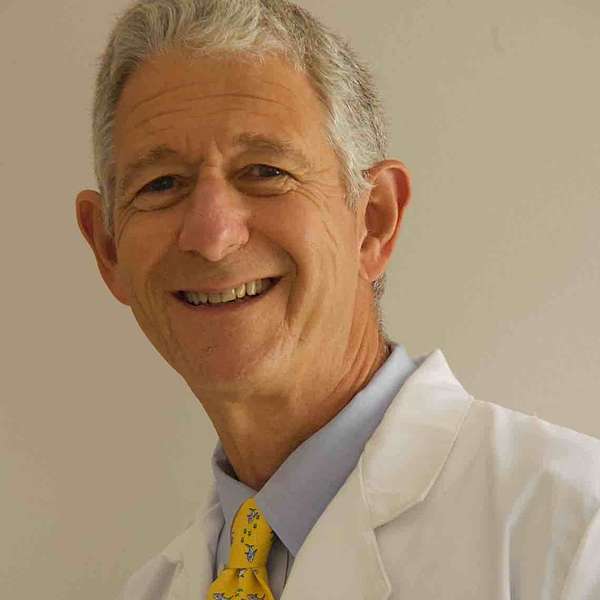
The Art of Medicine with Dr. Andrew Wilner

"Whispers of the Mind" with author and neurologist Carolyn Larkin Taylor, MD

Andrew Wilner, MD Season 1 Episode 152

Use Left/Right to seek, Home/End to jump to start or end. Hold shift to jump forward or backward.

0:00 | 39:46

Dr. Wilner would love your feedback! Click here to send a text! Thanks!

Many thanks to neurologist and author Dr. Carolyn Larkin Taylor for joining me as a guest on “The Art of Medicine with Dr. Andrew Wilner.” Dr. Taylor recently published “Whispers of the Mind,” a collection of essays that describes the extreme challenges faced by her patients, poignant moments, and, finally, a concession to the fragility of life —a concession that, frankly, is difficult for many physicians.


Dr. Taylor was in the first class of women who graduated from Notre Dame. After graduation, she trained as an optometrist for four years and then practiced for three years. She realized she wanted to do more and decided to go to medical school to become an ophthalmologist. She attended Hahnemann Medical School in Philadelphia, PA. But when she rotated on neurology, she “fell in love with it.” 


Dr. Taylor ditched ophthalmology and completed her neurology residency at the University of Pennsylvania. She recently worked as a neurologist in Seattle and flew to Alaska a couple of days a month to offer neurology clinics there. Currently, she works at the VA and performs disability evaluations for veterans who have suffered traumatic brain injury. 


Dr. Taylor stated that her book “chronicles my

Journey and growth as both a neurologist and human being.” 


Dr. Taylor always kept a journal, which allowed her to illustrate her patient anecdotes with incredible detail, both physical and emotional. Despite the gravity of her subject matter, she found many of her patients’ stories inspiring. She also shares stories of her golden retriever, Prancer, who accompanied her to work and had a knack for comforting patients.


We had a fascinating 40-minute discussion. To learn more or to contact Dr. Taylor, please visit her website: https://www.carolynlarkintaylorauthor.com


#fiction #memoir #medicine #humanities 

Please click "Fanmail" and share your feedback!

If you enjoy an episode, please share with friends and colleagues. "The Art of Medicine with Dr. Andrew Wilner" is now available on Alexa! Just say, "Play podcast The Art of Medicine with Dr. Andrew Wilner!" 

To never miss a program, subscribe at www.andrewwilner.com

Follow me on Instagram: @andrewwilnermd

X: @drwilner

linkedin.com/in/drwilner 


Please rate and review each episode. 

To contact Dr. Wilner or to join the mailing list: www.andrewwilner.com

This production has been made possible in part by support from “The Art of Medicine's” wonderful sponsor, Locumstory.com, a resource where providers can get real, unbiased answers about locum tenens. If you are interested in locum tenens, or considering a new full-time position, please go to Locumstory.com.


Or paste this link into your browser:

https://locumstory.com/?source=DSP_directbuy_drwilnerpodcast...

[Andrew Wilner, MD] (0:07 - 1:33)

Welcome to the Art of Medicine, the program that explores the arts, business, and clinical aspects of the practice of medicine. I'm your host, Dr. Andrew Andrew Wilner, MD. I've planned a great program for today, but first, a word from our sponsor, locumstory.com.


Locumstory.com is a free, unbiased educational resource about locum tenens. It's not an agency. Locumstory answers your questions on their website, podcast, webinars, videos, and they even have a Locums 101 crash course.


Learn about locums and get insights from real-life physicians, PAs, and NPs at locumstory.com. Today I'm pleased to welcome Dr. Carolyn Larkin Taylor. Dr. Taylor is a neurologist and author of the new book, Whispers of the Mind. This collection of essays describes the extreme challenges faced by her patients, poignant moments, and finally, concession to the fragility of life, a concession that frankly is difficult for many physicians. According to Dr. Taylor, Whispers of the Mind, quote, chronicles my journey and growth as both a neurologist and human being. Here to tell us about her book, her life's work as a neurologist, and her colleague for many years, prancer, is Dr. Carolyn Taylor.


[Carolyn Larkin Taylor, MD] (1:34 - 1:51)

Welcome. Thank you so much. It's a real honor to be here talking to you.


The art of medicine is really what it's all about, and it's wonderful that you have this podcast and even more wonderful that you're a fellow neurologist.


[Andrew Wilner, MD] (1:52 - 2:39)

Yes, we have that in common. In the art of medicine, we're on year six now. You'll be episode number 152.


It started, I was doing episodes about locum tenens, which was to kind of help make, increase the visibility of my new book at that time, and then I did a lot about locums and I was thinking, you know, this is kind of fun. What else can I do? And so it evolved into the art of medicine.


And one of the great joys of the art of medicine program is I get to interview physicians who have written a book. I find that fascinating. And so Whispers of the Mind, you're going to tell us all about that.


But first, medical background and training. How did all of this happen?


[Carolyn Larkin Taylor, MD] (2:42 - 2:59)

Well, I went to medical school back in Philadelphia. I live in the West Coast now. I live in Bellingham, Washington, which is the far northwest corner of the state.


We're actually a little closer to Vancouver than we are to...


[Andrew Wilner, MD] (2:59 - 3:04)

I was just going to say, that's kind of the end of the U.S., right? That's... It is.


The very end. Canada.


[Carolyn Larkin Taylor, MD] (3:08 - 3:10)

Yes, we're about 20 miles from Canada.


[Andrew Wilner, MD] (3:11 - 3:11)

Oh, OK.


[Carolyn Larkin Taylor, MD] (3:11 - 3:39)

Yeah. It's beautiful here. Right on the water.


And we have views of the San Juan Islands. And you have whales up there, right? Orcas, yes, yes, that's kind of...


And Mount Baker, which is one of the best snowboarding mountains in the country. I was drawn to this area because I grew up on the ocean in Spring Lake, New Jersey. So I was used to salt water and I have to be near water.


I don't think I could ever live in Tennessee for just that reason. We have a river.


[Andrew Wilner, MD] (3:39 - 3:40)

It's a Mississippi.


[Carolyn Larkin Taylor, MD] (3:41 - 3:45)

It's not the same. We have to make do.


[Andrew Wilner, MD] (3:45 - 3:45)

Yes.


[Carolyn Larkin Taylor, MD] (3:46 - 4:06)

Yes. So it's what you're used to, I think, that you're drawn to. And so I grew up there and I find myself now out here for a variety of reasons.


But I went to medical school at Hahnemann Medical School, which now... In Philadelphia, which now has been taken over by Drexel. So it's part of Drexel University.


[Andrew Wilner, MD] (4:06 - 5:06)

Let me interrupt you just for a moment. I spent two hot, humid months at Hahnemann in 1977 as a pre-medical student rotation before I started my first year of medical school. How about that?


And I have vivid, vivid memories of the patients I saw there. You really? It's like including one patient who exploded.


It's one of my favorite stories. We'll save it for another day. But I have a patient who exploded.


And, you know, I knew nothing, right? I was just literally out of college. And they said, OK, you're going to follow this team around.


And I had an apartment in somebody's attic for the two months. And I would drive to the hospital. And it is hot and humid there, right, in the summer?


[Carolyn Larkin Taylor, MD] (5:06 - 5:14)

It's very hot and humid in the summer. And you're right down in the center of Center City. So you get a really unusual population there.


[Andrew Wilner, MD] (5:14 - 5:20)

And what was that river? Schoolkill, that area, the white river I followed to the hospital?


[Carolyn Larkin Taylor, MD] (5:21 - 5:28)

Schoolkill River, where you see all the boat rowers out there in the mornings, early mornings from the University of Pennsylvania.


[Andrew Wilner, MD] (5:29 - 5:30)

So you did medical school there?


[Carolyn Larkin Taylor, MD] (5:30 - 5:47)

I did medical school there, yes. Yes. And before that, I went to, I was a pioneer in college because I went to the University of Notre Dame.


And I was the first class of women to graduate from there. It was 200 women. So you were a quarterback.


[Andrew Wilner, MD] (5:47 - 6:01)

That's what Notre Dame is famous for. You were the first female quarterback, right? Yes.


You were a pioneer. Yeah, Notre Dame has always been a very masculine institution, I would say.


[Carolyn Larkin Taylor, MD] (6:01 - 7:40)

Always, yes, yes. So it was really kind of fun. I like doing things where you're kind of the pioneer.


It was a lot of fun to be part of that special group. And my father had gone there and my older brother had gone there. So I saw that school when we dropped my brother off.


He was seven years older than I was. And I remember thinking, because we all drove him out to drop him off that first day, that it was the most beautiful place I had ever seen. It's got a very spiritual feeling to it, Notre Dame school spirit.


I don't know what it is, but you feel it the moment you walk on campus. So that was where I always wanted to go, but knew I couldn't because I was a girl until I could. So, of course, I had to go there.


Wow. Yeah. And so I went to I graduated from Hahnemann and I went on and did a medical internship at Medical College of Pennsylvania, which is now also part of Drexel University.


But interestingly, that was the very first women's medical, the very first and only women's medical college. When I went there, as did my internship, it was coed by that time. But most of the physicians that they took are more than 50 percent were women.


And I really wanted to go there because I had a little baby. He was a year old. And I thought maybe in that.


That particular atmosphere, they might be a little more understanding if he got sick, I don't know. But it was just the same as every medical school. But and I completed my neurology residency then at the University of Pennsylvania.


[Andrew Wilner, MD] (7:41 - 8:30)

Well, let me stop you again. Neurology, first of all, it's not the number one pick of any medical student. And I chose it through a very long kind of unwinding decision making tree.


But particularly for women back now, there's a fair number of women neurology residents. But way back, way back in our day, it would have been very unusual. No bow tie.


You know, this was a very male and kind of I mean, neurologists were famous for their lack of people skills in those days and being very bright and intellectual and kind of cool. So it didn't appeal to many women. And you don't strike me at all like that.


So how did it appeal to you?


[Carolyn Larkin Taylor, MD] (8:31 - 9:51)

Well, I came about it in a very unusual way as well. Out of college, I went to optometry school. And it's a four year program.


And I got out and I practiced optometry for three years. Oh, wow. But I worked with ophthalmologists at Will's Eye Hospital and a variety of other places.


So I was doing some unusual things with optometry. And I realized it's not enough. I wanted to do more.


And I decided to go back to medical school. So here I am now in medical school thinking, well, I'll probably become an ophthalmologist. And when it's time to do your rotations, I really didn't like it because it was like, well, this is everything I was doing before.


Only I'll add a few mornings of surgery, probably mostly cataract surgeries, unless I specialize in retina or cornea or something. But then it's just a small little area that you do and you don't get as much human contact. I love the human contact of bonding with my patients and getting to know them and following with them that that really enriched me.


And when I did my rotation in neurology, I just absolutely fell in love with it. I got the book and I read the textbook, Adams and Victor. I read it from cover to cover.


[Andrew Wilner, MD] (9:51 - 9:52)

Yes, I have.


[Carolyn Larkin Taylor, MD] (9:53 - 10:55)

Yes. And I loved everything about it. I love the diet, mostly the diagnosing, you know, the the variety of cases.


And you were just you were like a Sherlock Holmes. And I loved it. And when I did neuroanatomy in medical school, they offered me a job because I did so well in it.


You know, I got 100 percent on the neuroanatomy lab final. I just loved neuroanatomy. And I can't say that for the rest of anatomy, but there is something about neuroanatomy that I love.


So I was just drawn like a magnet. And neuroanatomy, I'll just add, is dreaded by most medical students. I mean, I know it's hard.


So you were an outlier for good. I was I was definitely an outlier. And nobody liked the neurology rotations.


And, you know, it was a requirement at Hahnemann that you do a month in neurology, whether you wanted to or not. And nobody liked it. And they said, oh, all you can do is give aspirin and steroids.


What's the point? And of course, it's we do a lot more than that. But I loved it.


And I knew from the moment I did that rotation that I had to be a neurologist.


[Andrew Wilner, MD] (10:56 - 11:07)

So that's very cool. And, you know, you kept you must have kept. Because now you're at the are you still practicing at the tail end of your career?


[Carolyn Larkin Taylor, MD] (11:08 - 12:12)

I gave up clinical practice in Seattle a few years ago, and I stayed on with them to go to Alaska to Southeast Alaska Health Consortium. I would go there a few times a month to staff their clinics because they didn't have any neurologists. And then I just decided I wanted to write that I was going to devote time to that.


And now I'm tired of traveling, you know, flying and things like that. In and out of Alaska and going to the different islands and going back and forth from Seattle to Bellingham. And I just want to stay put.


So I'm seeing veterans a couple of days a week. Oh, well, to do disability evaluations for traumatic brain injury. So it gives me still that patient contact that I love.


And I love working with veterans. They are just a great population of people to work with. And it doesn't pay very well, but that's not why I'm doing it.


It's it's I just love working with veterans and somebody, you know, they need better care.


[Andrew Wilner, MD] (12:13 - 12:37)

Yes. Public service. And well, I was going to comment that your book, Whispers of the Mind, it's I don't know, there must be 30 or so stories of patients you had and how you were able to help them or not and how they affected you and how you affected them.


But it's very, very vivid. So did you keep a journal during your years of practice?


[Carolyn Larkin Taylor, MD] (12:38 - 12:43)

I did. I did. You know, I don't consider myself a writer, but I'm a physician who likes to write.


[Andrew Wilner, MD] (12:44 - 12:45)

Well, you're a writer now.


[Carolyn Larkin Taylor, MD] (12:45 - 15:26)

You've got this book. Yes. And so all during medical school and my training, I kept a journal.


And that is how I processed information. I I didn't keep it with an intention of ever writing anything, but it would help me process things. That were had a that I was very emotional about because you have to keep going.


You have to keep going from one case to another. And you have a child that dies or a particularly bad thing that happens that really, really affects you. And all the stories I wrote about were about people that really affected me.


And they were all people that I went home and wrote about. And so when I I decided to slow down in clinical practice, finally, because I never I've never taken any time off in all these years. I sat down and read through this.


And I was just really struck by how I felt at one stage of my career versus later in my career. I could see my own transformation and growth. But I was struck by the inspiring stories of some of the people that I wrote about.


And I really decided, you know, I want to make this more literary and I want to share that with people because there's some of these stories are very inspiring. I didn't write it to teach people neurology. It's really about.


The human experience of being a neurologist and taking these people, they're my readers in with me to the intensive care unit and at the bedside to see what it's like to see the human interaction. And you have to tell some things about neurology so they understand what you're dealing with in that situation. But I also felt that there's such a distrust of medicine today.


And I wanted to humanize medicine for the reader so that they understand that we're human, just like everybody else. We can make mistakes, although we try very hard not to. And that the things that we are dealing with affect us.


And even even when you deal with death a lot and all physicians do, maybe dermatologists, not so much. But when you're dealing with death, you have to face your own mortality. And that's a difficult thing to do.


And I think I talk somewhere in that book or not. I did it somewhere else that there's certain personalities in medicine. As you pointed out, I don't seem like somebody that would be a neurologist, but there are surgical personalities and dermatology personalities and oncology personalities.


And people tend to be drawn to what they're uniquely suited to, what they're comfortable with and people that aren't comfortable with mortality, their own mortality, are going to naturally, I think, avoid those things.


[Andrew Wilner, MD] (15:28 - 16:41)

Well, let me say that in reading your book, I'm a neurologist, so I understood what was happening with your comatose patients and Parkinson's patients. And there was one with maybes and functional disorder. And that was very interesting.


But I think you explain just enough in a very clear way. You give the reader enough tools to understand what you're talking about with without getting into the wheat. And that's not easy to do.


I mean, there are plenty of textbooks out there on neurology. But, you know, when I explain things to families, for example, I try and give them just enough information so they can follow along because that's all they really need. They don't need a course in neurology.


They just need to be able to understand. If I'm talking about the spinal cord, it's like, where is it and what does it do and what happened to it? So we try and keep it very simple.


And I thought it was just part of the story. You know, it's just like you say, well, I went to Bellingham. You know, I don't know where Bellingham is on the water.


And you'd fill me in. You know, well, it's, you know, a little town and it's got a mountain. I don't know, you know, a few stores by the waterfront.


You would just tell me enough that I need to know so that the story would make sense. And I thought you did an excellent job on that.


[Carolyn Larkin Taylor, MD] (16:42 - 16:55)

Well, thank you. Thank you. I had a good editor who wasn't a physician.


And so when I would write something that he couldn't understand, he'd say, oh, you've got it, you've got to fix that. I you lost me.


[Andrew Wilner, MD] (16:56 - 17:38)

And so, you know, death, I think. Let me know if this happens to you. There's a common experience with medical students and young doctors.


You know, you see patients in neurology. Most of your patients are old. So it's like, oh, that's a 60 year old guy and he's had a heart attack and now he's had a stroke or he's, you know, 65, you know, and you're 35.


So it's like, well, you know, what do you expect when you get old? But, you know, as you kind of evolve now, patients who are having sort of these devastating problems and many of them are are significantly younger than me. So that is very sobering.


Did you find that as well?


[Carolyn Larkin Taylor, MD] (17:39 - 19:15)

Oh, very much. Very much so. But I think from.


An experience I had as a third week in my neurology residency when my mother died. And she was 72 and she had. Respiratory disease, COPD from smoking, which a lot of our older patients on respirators have because they get surgery and then they can't get them off.


But she died. She shouldn't have died. She was given a blood thinner and they didn't watch it very carefully.


And so she had a massive bleed. And so I was the only physician in the family and had to make the decisions. Do we put her on dialysis?


I knew her brain had been infarcted and would never regain consciousness or let her go. And so I helped with that decision. But after that, that week and then I we buried her on a Saturday and I was on call in the hospital neurology.


On Sunday. After and, you know, in neurology residency, you're dealing a lot with intensive care unit patients and people with strokes and, you know, you do your rounds in the ICU. The patients, it was never the same.


When I saw a patient and it wasn't just an elderly patient that was older than me that, well, OK, they they're 70. You know, they are lived their life. And OK, so they've had a stroke.


No, it was very, very personal. That's somebody's mother. That's somebody's wife.


[Andrew Wilner, MD] (19:15 - 19:16)

Right.


[Carolyn Larkin Taylor, MD] (19:17 - 19:34)

And the patient's families, I felt their pain in a way that I never would have without that experience. And I would have gained that along the way. But it hit me so early in my training that it was kind of I like to say it was my mother's gift to me.


[Andrew Wilner, MD] (19:36 - 21:06)

And I almost let us make you a better doctor, for sure. I mean, you can't share everybody's pain, but on the other hand, you can be cognizant of it, what they're going through. Yes.


And, you know, I learned something once. It was some expression that, you know, patients don't remember how smart you are and they don't even know how much training you did. Like I did two residencies and a fellowship.


They don't know that. But what they do know and what they do remember is if you were nice to them. Exactly.


We're kind to them. And I find that I I go overboard a little bit on the kindness now when I'm in the ICU setting and talking to families because usually I don't have a whole lot more to offer than that. And at least they can.


That's for free. And I think it it helps. I mean, if you can soothe them a little bit, you know, and I provide the information that they need, hopefully in the language and the vocabulary level that's appropriate for them, you know, and you have to read the room and sort of see where you're at.


You know, if it's a physician family that you're talking to versus, you know, a blue collar family. We have a lot of FedEx workers here in Memphis that mostly move boxes from one spot to another. You don't want to make it too complicated.


You want to do it right, you know, in a nice way. So I work pretty hard on that.


[Carolyn Larkin Taylor, MD] (21:07 - 21:29)

Yeah. And that's so important. I mean, you see many, many patients, but this may be their only experience with a doctor, an intensive care unit.


And they will remember that for the rest of their lives, how you told them and how kind you were and the fact that you were nonjudgmental, that that they'll always remember that. Yeah, you know, and when I was younger, I used to think it didn't matter.


[Andrew Wilner, MD] (21:30 - 21:45)

It is what it is. You know, your mom had a stroke. Sorry, it's not much we can do.


That's that's it. But it does matter. It's not it is what you make it.


Exactly. Exactly. Yeah, that was pretty interesting.


All right. Well, tell me about Prancer.


[Carolyn Larkin Taylor, MD] (21:47 - 27:44)

Well, Prancer is was my dog. She was a golden retriever. And I was in private practice.


Here in Bellingham was before I decided to go join a large academic center in Seattle, and I had to bring Prancer to work because she was chewing up my house. She was had separation anxiety. So I thought, well, I'll bring her in a few days a week and just put her in my private office.


She has seagulls to look at and toys and all kinds of things. And I'll play with her whenever I get a chance. And she wasn't having that.


She was howling. And the patients heard that. Oh, there's a what's what's that?


And not only a puppy, not another patient. Right. Not not just a puppy, but a golden retriever puppy.


So everybody wanted to see her. And I thought, oh, great. Now, how am I going to get through my day?


Everybody's going to be playing with the dog and I've got a schedule. But Prancer knew when to stop. I would bring her in and they'd see her and just be all delighted.


And then as soon as I engaged that patient from the time she was a puppy, she'd stop and she just lay down and didn't bother us. And so as time went on, she was becoming a regular part of the practice. And people would call and say, you know, I'm coming in for my three month visit, but I'm not coming at Prancer's not there today.


I'll only come the day Prancer's there. That I thought, well, I've got to do something here. I've got to make her official.


Put her on payroll. Yes, put her on the payroll. So I got her certified through this pet partner program that is like an umbrella where they will, if the dog is as the right temperament and the right training, then they will certify them and they'll actually cover them with insurance that you can take them into a hospital, you can take them into your office, take them to disaster sites.


These for your audience are the dogs that, you know, go to places after there's been a school shooting or there's been a an earthquake to help calm people down. That's what a therapy dog is. And they do have training with regard to temperament and.


Obedience, and a lot of them are golden retrievers because they are very comforting dogs. So Prancer became official and she was with me almost every day for 14 years. She was here with me in a private practice, and I took her to Seattle where I worked for.


About seven years, and she would go to the infusion center with me, she could go into the hospital and she was just by my side, but Prancer was just so special. She. And I'll give one example, which is in my book, and, you know, the example I'm going to talk about, but it's such an endearing story, it's my favorite story about her.


She would I would go in to see a patient. And close the door and start and introduce myself and tell the patient that there was a therapy dog on the premises. And if they wanted her in the room, I would bring her in.


If they didn't, she would stay outside. Well, 95 percent of patients wanted her in the room. Wow.


And then a few minutes later, Prancer would just gently scratch on the door. And if she was wanted, I would open the door, she'd come in, she'd say hello, and then she just lay down next to the patient. That was it.


Unless they interacted with her. And she obeyed hand commands so I could stop her and move her, do anything I wanted. And so one day I was seeing a patient.


In consultation, who was a young man that was quadriplegic from the neck down as a result of his devastating motorcycle accident. And he was in his electric wheelchair in the middle of the room and all around the room were family. There must have been five of them sitting on the exam tables and stools and chairs.


And it was such a claustrophobic environment. I left the door open, but I forgot about Prancer. And I'm interviewing the patient and he's not saying much.


You know, he's just very despondent. And the family is all chiming in with telling us, telling me what had happened. And they were just there for anything I could possibly offer them.


And as you know, there's not much. Maybe bowel and bladder management, spasticity management put him in touch with social services. There isn't much.


And they were just grabbing at straws. And all of a sudden, this young man looked past me at the door and I turned and looked. And there's Prancer just sitting in the doorway.


And I said, oh, I'm so sorry. I forgot to tell you there's a therapy dog on premises. And just then, the boy spoke, the young man spoke for the first time.


And he just looked, they locked eyes. And he said, I love dogs so much. I would give anything if I could just pet that dog.


And of course, he was lifeless from the neck down. And none of us knew what to say. And at that moment, without my motioning, she got up and she slowly walked over to him in the middle of the room, sat down by the wheelchair and put her head and muzzle right on his hands on his lap and never moved the entire hour.


He started to cry. We all started to cry. It was so moving.


And that dog did more for that young man that day. And I ever could have or anybody ever could have. And so it was a productive visit for him.


I ended up prescribing at least an antidepressant. And my hope is that that family got him a therapy dog or service dog that would would at least keep him company. And it was just he came alive in that moment when that dog walked in.


So there was days and she just did incredible things like that. And many days, of course, were just routine. But she was a real asset to to me and to my patients and a real comfort.


[Andrew Wilner, MD] (27:46 - 28:26)

And so I have never seen or heard of such a thing. So I know about pet therapy and there are these days it's quite common to have a therapy dog. And well, I'm an epileptologist and there's always been discussion that dogs can really sense a seizure coming on or, you know, but their epilepsy patients, some of them will have a therapy dog to kind of help them in the event of a seizure.


It's quite expensive and not easy to get. And they require a lot of training. So it's not a widespread thing.


But I don't know any physicians who have a a Labrador golden retriever colleague.


[Carolyn Larkin Taylor, MD] (28:26 - 29:40)

Yeah, I was the only one in our whole hospital system. And she made the news. She was she was really, really something.


They even offered to send her with me to Alaska if that would get me to go. So I wouldn't put it. I wouldn't do that to her, put her on a plane.


I just wouldn't do it. But she was very, very special. And so in this book, I actually devoted two essays, one called Prancer Tales, where I told individual stories of her.


And then the last essay that I wrote was called Thank You for Your Service. And it's a eulogy to Prancer. She died.


She died shortly after we left practice where she was coming to work with me. That was when she was old and she got sick from old age. But most golden retrievers don't make it that far.


They notoriously get cancer. I've lost three or four goldens over the years to cancer. But Prancer, she is just very special.


The dogs I have, I have two dogs now, a Bernese Mountain Dog and a golden. I could never take either of them to work. They're just they're just not the same personality.


But there was something very unique about this dog.


[Andrew Wilner, MD] (29:42 - 29:58)

As a writer myself, I'm just a technical question. Where did you find the time to keep your journal? How did you prioritize it?


Did you do it first thing in the morning when you woke up or before you went to bed or just scribble during the day? How did that happen?


[Carolyn Larkin Taylor, MD] (29:58 - 30:55)

I did it at night. I did it at the end of the day because it helped me sleep. So I could take these thoughts would be ruminating in my mind and I'd be going over it and over it again.


Should I have done this? I've done that. You know, maybe I said this wrong.


And if I took that and put it on paper, then I was fine. I'd taken it. I put it there and I could go to sleep.


It helped me sleep. And, you know, I didn't write every night, obviously. There was nights you're too tired.


There was nights that, you know, you're on call. And I and I didn't write every day because there wasn't something that affected me emotionally every day. But when something affected me emotionally, I would find that I really couldn't rest until I put it somewhere else.


And then I could I could tie it up with a bow and it would be there and I could go on to the next, you know, the next situation. It really it was like my own little therapist with a pen and paper, and I could just put it there.


[Andrew Wilner, MD] (30:56 - 31:43)

That's great, you know, because I think journal journaling is pretty trendy now and as sort of a mental health aid for a lot of people. And it seems like you've stumbled on that all by yourself. Yeah.


Let's see. All right. Well, one of the things I enjoyed about your book is how frank and honest it is.


And it was one comment. I don't remember what precipitated it, but there's a passage in your book where you said that there was something going on that you just felt compelled to stick your head in the dryer and scream. And that's not something, you know, you could invent that.


That and it's nice that you shared it. But what was it that precipitated that?


[Carolyn Larkin Taylor, MD] (31:44 - 34:39)

Well, I had a baby. In my third year of medical school, and I had back then there was no maternity leave for students. There weren't that many women.


And so I arranged this research rotation I had for when he was due. And praying that he wouldn't be late and that I would have some time with him. And so he cooperated very well.


He was early and was born the day after my research rotation began. And I had a month with him. And this little boy, this baby, as it turned out, had pyloric stenosis.


So there was a narrowing for the purpose of your your listeners. There was a congenital narrowing of the entrance from his stomach into his into the intestine. So anything he ate had a difficult time getting through to the intestine where the nutrients would be absorbed.


And so I'd feed him about every hour and then he'd throw everything up. And it got worse and worse and worse. And I couldn't feed him.


And I kept calling the pediatrician and they kept saying, oh, he's got, you know, gastric reflux, just elevate his bed or he's this or he's that. And I was treated like the anxious medical student that I was. That's your first baby.


First baby. And so as the month, as the weeks went on, it just got worse and worse. And I couldn't feed him.


And all he did was scream. And my husband had he was hungry and I knew it. And my husband had gone back to work.


I was just there alone with this baby. And I thought, you know, if only I could just be at the hospital and work and just I'll take any call, I'll do anything. I just have to just I'm just so frustrated.


I couldn't sleep. So finally, I didn't know what to do. I ran down to the basement where our washer and dryer was, and I stuck my head in the dryer because I didn't want any neighbors to hear me.


And I just screamed as loud as I could. And that relieved some of the tension. And as it turned out, so finally, I kept calling.


And when he was hard to wake up because he wasn't eating enough, they finally brought him in and did emergency surgery that day and fixed it by larynx stenosis. So I had this wonderful month of a baby that couldn't eat and screaming. And by the time I went back to work, he was now.


Taking in eight ounces of formula and more, he went from the 50th to the 100th percentile in a few weeks. This poor baby had been starved and became this normal baby. Now, now I had to go back and I didn't.


It was just an awful month, a terrible month of new motherhood. But that's what drove me to the basement.


[Andrew Wilner, MD] (34:41 - 35:42)

OK, you know, I what did the I mean, just the the authenticity of your story. I think that it's all of your stories are like that. And I think the book is is very not only informative about the various medical conditions that your patients had, but the art of medicine well represented there and what what people really experience and how often they're on their own.


I think that's something, you know, there is a loneliness epidemic that we have in the United States. But when it comes to crises, people find that, boy, help is often far away and you deal with a lot of stuff by yourself that you wish you'd had a lot more experience and a lot more community and a lot more help. So I think that's another moral.


That's right. Well, OK, we're running out of time. Anything else you'd like to add before we wrap up?


[Carolyn Larkin Taylor, MD] (35:44 - 35:45)

No, I don't think so.


[Andrew Wilner, MD] (35:47 - 35:48)

All right.


[Carolyn Larkin Taylor, MD] (35:48 - 36:29)

So where can we get the book? The book is available on Amazon. It's available at all your major bookstores.


It's available. With Apple and Google and Barnes and Noble, so you can just ask for it if they don't have it, they'll order it for you. It's distributed through Simon and Schuster, so it's readily available.


But most people just prefer to. It's easy to order things on Amazon. And if you read the book by the book and read the book, I'd very much appreciate it if you would leave a review because that helps get the book noticed.


[Andrew Wilner, MD] (36:30 - 36:54)

Yes. And, you know, I often leave reviews because, you know, you want to tell somebody about the book. Yes.


Like, you know, these stories were interesting or boy, what I never would have imagined that or this is so terrible. Don't pick it up. You know, but you have a as a reader, if you really read the book, any book, you have a response.


So, yeah, please leave reviews. And I'm sure they will all have many stars.


[Carolyn Larkin Taylor, MD] (36:56 - 37:07)

Thank you. Thank you so much. And it means a lot to me that you read the book and that you enjoyed it as an as a neurologist.


You're the only the second neurologist that's read it. And I really appreciate that.


[Andrew Wilner, MD] (37:09 - 39:41)

Dr. Carolyn Larkin-Taylor, thanks for joining me on the Art of Medicine. Thank you so much. And now a final thanks to our sponsor, LocumStory.com.


LocumStory.com is a free, unbiased educational resource about locum tenens. It's not an agency. LocumStory exists to answer your questions about the how to's of locums on their website, podcast, webinars and videos.


They even have a locums 101 crash course at LocumStory.com. You can discover if locum tenens make sense for you and your career goals. What makes LocumStory.com unique is that it's a peer to peer platform with real physicians sharing their experiences and stories, both the good and bad about working locum tenens. Hence the name LocumStory. LocumStory.com is a self-service tool that you can explore at your own pace with no pressure or obligation. It's completely free.


Thanks again to LocumStory.com for sponsoring this episode of the Art of Medicine. I'm Dr. Andrew Andrew Wilner, MD. See you next time.


This program is hosted, edited and produced by Andrew Andrew Wilner, MD, MD, FACP, FAAN. Guests receive no financial compensation for their appearance on the Art of Medicine. Andrew Andrew Wilner, MD, MD, is a professor of neurology at the University of Tennessee Health Science Center in Memphis, Tennessee.


Views, thoughts and opinions expressed on this program belong solely to Dr. Andrew Wilner, MD and his guests and not necessarily to their employers, organizations, other group or individual. While this program intends to be informative, it is meant for entertainment purposes only. The Art of Medicine does not offer professional, financial, legal or medical advice.


Dr. Andrew Wilner, MD and his guests assume no responsibility or liability for any damages, financial or otherwise, that arise in connection with consuming this program's content. Thanks for watching. For more episodes of the Art of Medicine, please follow on YouTube or your favorite podcast player.


Please share with your friends and subscribe.